
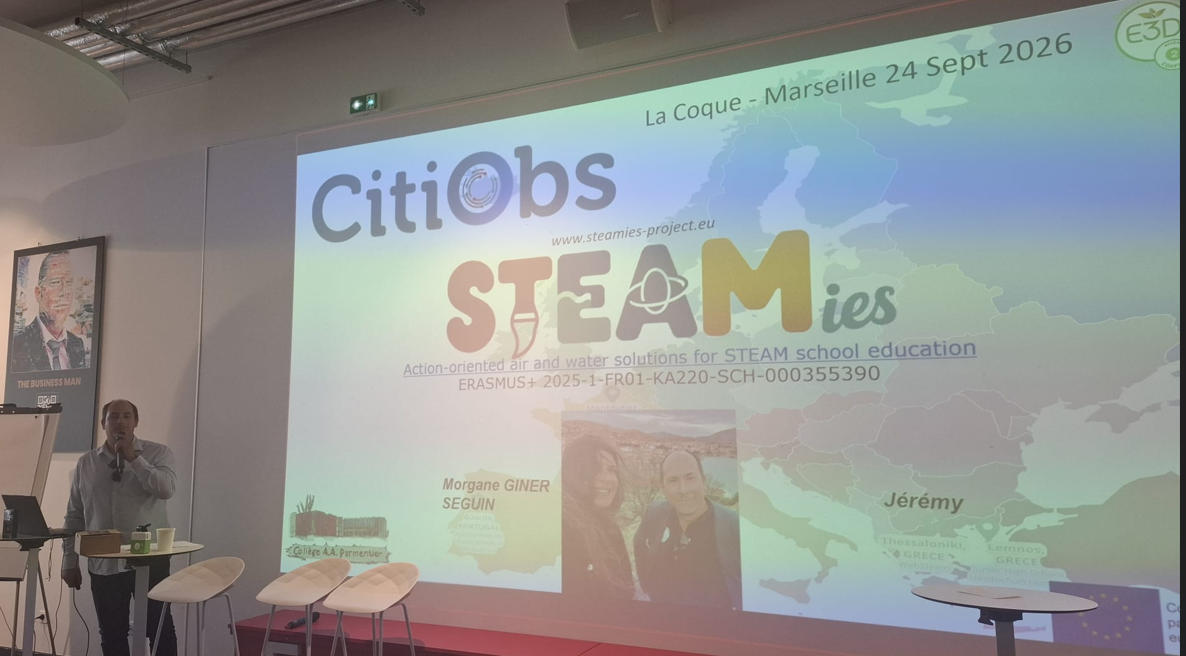
On Thursday, September 24 and Friday, September 25, 2026, the Erasmus+ STEAMies project of the Antoine Augustin Parmentier middle school in Montdidier experienced a milestone in Marseille, on the occasion of the European meetings of the CitiObs program. Between our conference presentation on Thursday in the heart of the Euroméditerranée business district and a morning of work on Friday directly within the AtmoSud laboratory, this trip made it possible to forge valuable links between the work of our middle school students, the world of research, and major public decision-makers.
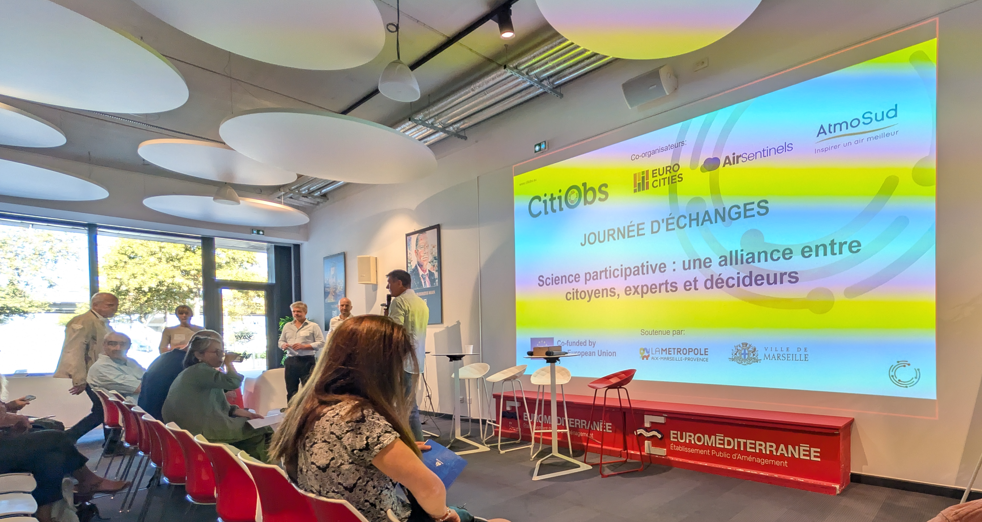
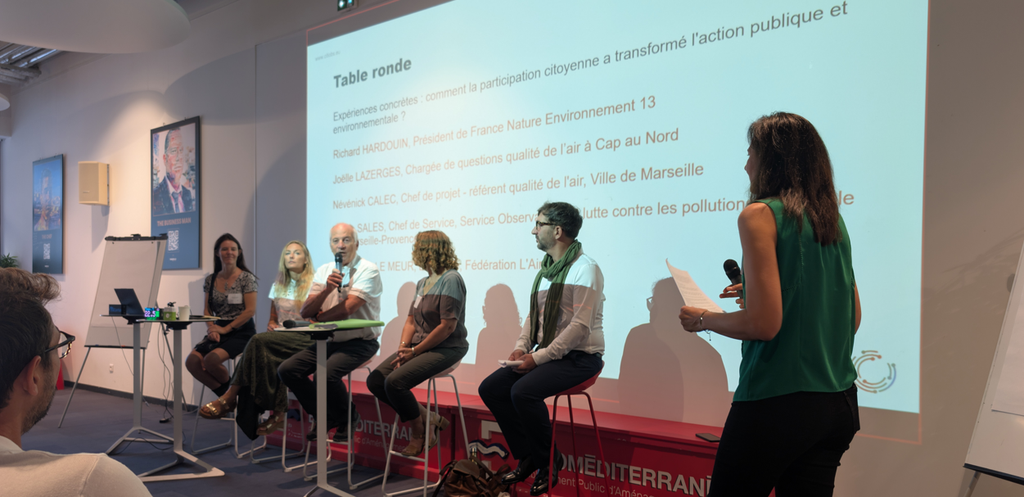
Thursday’s event, hosted in the La Coque innovation space and supported by the City of Marseille as well as the Aix-Marseille-Provence Metropolis, was co-organized by AtmoSud, AirSentinels, and the European network Eurocities. Right from the opening by Capucine Edou, Deputy Mayor of Marseille and Vice-President of the Metropolis in charge of ecological transition and the fight against pollution, alongside Dominique Robin (Director General of AtmoSud), David Riallant (Director of AirSentinels), Stina Heikkilä (Project Manager at Eurocities), and Núria Castel (Coordinator of the CitiObs project), the central question was raised: How to build a lasting alliance between citizens, experts, and decision-makers? Throughout the morning, the round table bringing together the departments of the City and the Metropolis, France Nature Environnement 13, the L’Air et Moi federation, and the Cap au Nord network showed the extent to which the use of citizen microsensors makes it possible to objectify the pollution experienced on a daily basis, give credibility to the voice of residents, and trigger public action.
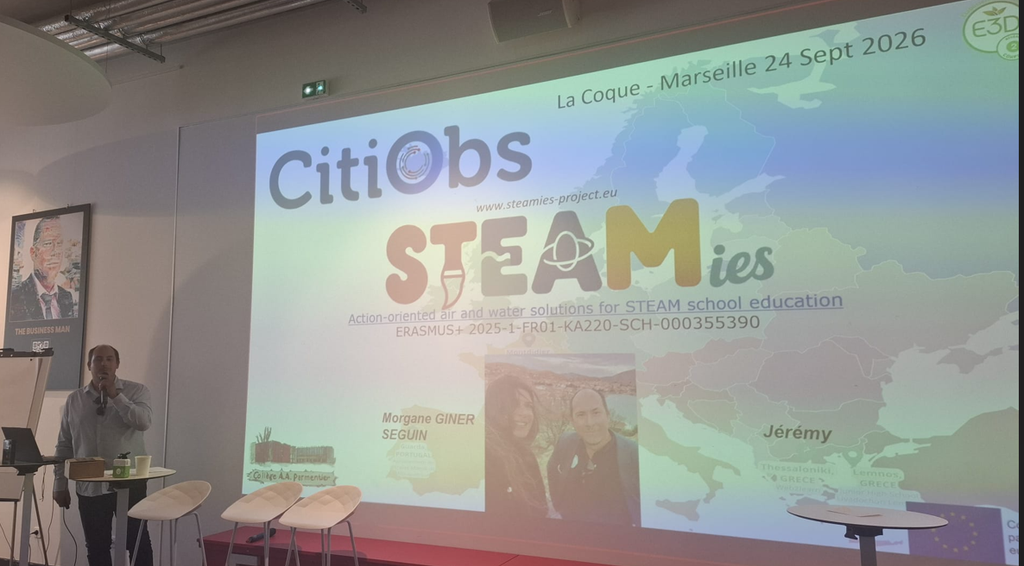
The afternoon gave the floor to five grassroots initiatives that came to share their methods. Alongside projects led in Marseille (AirCarto and Air Citoyen), in the Aude department (Institut écocitoyen en santé environnementale), or between Paris and New Delhi (StreetSmart), our middle school had the distinction of being the only school invited to take the stage. With my colleague Morgane Giner, we presented the « Do-It-Yourself » approach that we are developing with our students as part of the STEAMies project. Rather than using ready-to-use devices, our middle school students assemble their own air quality monitoring stations themselves (based on open-source Arduino and Smart Citizen technologies) and carry out their own water analyses in the field, whether in the Avre, the Trois Doms, or on the drinking water network. The presentation of our local network, which already counts around thirty active stations connected to our open platform, distributed between the middle school, Montdidier, and municipalities of our natural region (Santerre), sparked keen interest in the audience.
Discussions continued in the late afternoon around a very friendly World Café, where researchers, engineers, non-profit representatives, and project leaders gathered at small thematic tables to share their perspectives, notably with Paul Vuarambon on Open Source sensors, Damien Piga on the place of citizens in monitoring networks, Magali Guyon on the inclusion of all audiences, and Stina Heikkilä on European observatories. But the momentum did not stop at the doors of the conference: starting Friday morning, we had the opportunity to extend the work right inside the AtmoSud laboratory. Alongside their scientific teams and representatives from Eurocities, we were able to dive into the heart of the systems, educational activities, and concrete actions they have developed in the field, in order to study how to mutually enrich our approaches.
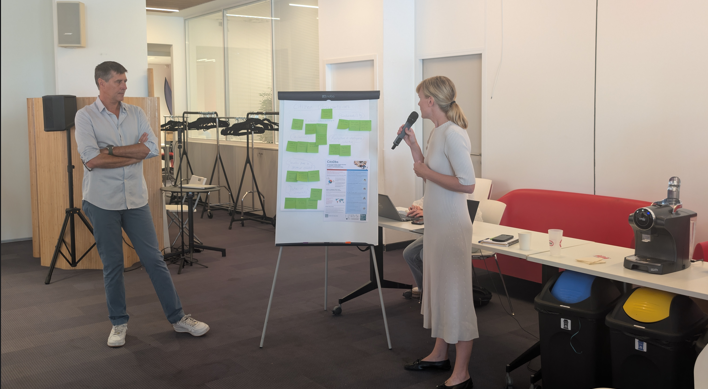
Beyond the pride of seeing the name of Parmentier middle school and our students’ work projected on the big screen in Marseille, these two days truly change the dimension of our project. Being able to engage as equals with major public decision-makers, work directly in the laboratories of an accredited observatory, and exchange with the leaders of European networks proves that what is being built in our science classrooms in Montdidier goes far beyond the scope of a simple school exercise. When elected officials, engineers, and researchers take environmental measurements carried out by middle school students seriously, it gives tremendous legitimacy to their commitment. It is exactly this energy that we are bringing back in our suitcases: showing our students that their readings truly matter, that they fully belong at the experts’ table, and that their data will now be able to serve as a foundation to imagine, on their own scale, concrete actions against local pollution.

